Preparing for your UK theory test
Knowledge, understanding, skills and practice is the key.
Having the best possible theory knowledge and understanding of all the rules of the road will actually save you money on driving lessons and make you a safer driver for life. An investment now in reading the rules of the road, reading the recommended reading list and doing the apps will save you money later on lessons.
Multiple choice + 14 hazard clips. Must be passed before booking Stage 2.
40-minute in-car assessment covering driving, manoeuvre and independent driving.
One follows the other automatically — the more you know about the rules of the road and the Highway Code, the quicker you will learn to drive safely and the less you'll spend on driving lessons.
The Highway Code
Essential road rules, right of way, road markings, and motorway driving regulations.
Traffic signs & signals
Master all regulatory, warning, and directional British road signage.
Hazard perception
Identify developing hazards early across CGI video clips to score above the 44-point threshold.
Stopping distances
Thinking and braking distances in dry and wet conditions at varying speeds.
Vehicle safety & checks
Understanding tyre tread depth (1.6mm legal limit), fluid levels, and dashboard lights.
Road vulnerability
Protecting pedestrians, cyclists, motorcyclists, and horse riders on town and country roads.
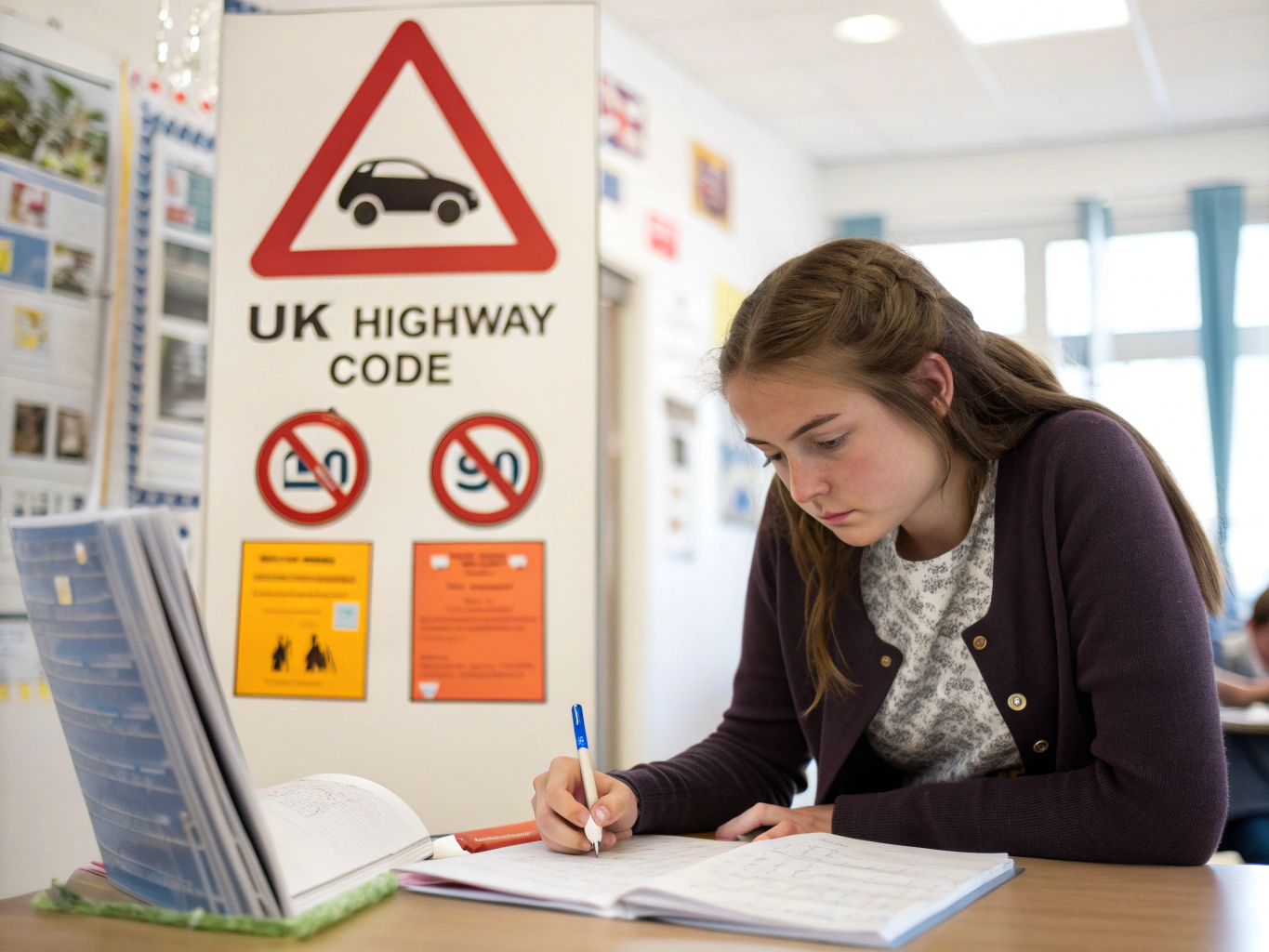
Official practice available
You can try sample multiple-choice questions and practice hazard clips on the official GOV.UK site before your real test.
The best books for learning to drive
The Driver and Vehicle Standards Agency (DVSA) publishes the official learning materials used to prepare for the theory and practical driving tests.
My recommended reading order would be:
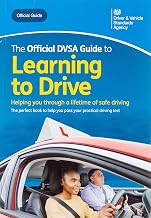
The Official DVSA Guide to Learning to Drive
The best starting point for a complete beginner.
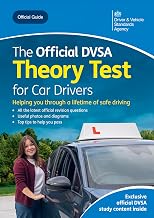
The Official DVSA Theory Test for Car Drivers
Practice questions and explanations for the theory test.
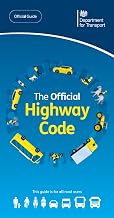
The Official Highway Code
Essential road rules, legal requirements.
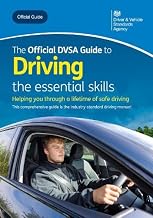
The Official DVSA Guide to Driving: The Essential Skills
A much more detailed guide to driving techniques, observation, road positioning and hazard awareness.
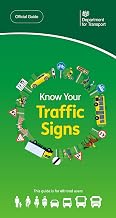
Know Your Traffic Signs
Complete guide to all British warning, regulatory, direction and informatory road signs.
Essential rule of thumb
As a bare minimum, read the Highway Code cover to cover two or three times. This alone lays the groundwork for answering test questions accurately and recognizing road priority automatically when behind the wheel.
The best theory test apps for UK learners
For UK learners start with the official DVSA Theory Test Kit, followed by one or two independent apps that offer different practice questions and hazard perception clips.
Choose an app that covers both parts of the car theory test:
Multiple-choice questions
50 questions in 57 minutes, with 43 correct answers needed to pass.
Hazard perception
14 video clips, with a maximum score of 75 and a pass mark of 44.
Recommended theory test apps
Official DVSA Theory Test Kit
Best official app£5.49 · iOS and Android
The DVSA's official publisher provides revision questions, mock tests, hazard perception practice and voiceover support for people who prefer listening to reading. Updated in 2026.
Driving Theory Test 4 in 1 Kit – Driving Test Success
£5.99 · iOS, Android
Excellent all-round alternative with DVSA-licensed questions, mock exams, hazard perception clips and progress tracking. Particularly useful for practising a broad range of questions.
Theory Test Revolution – Driving Theory Test Kit
Free download · In-app purchases
Covers several vehicle categories, including cars and ADI theory, with DVSA-licensed materials. Useful if you want more question practice or a different app interface.
Driving Theory by James May
Subscription · Around £4.99/month
A more engaging approach, with video explanations, personalised revision and encouragement from James May. Good for learners who struggle with traditional textbook study.
Apps are brilliant — but not enough on their own
Apps are really good but only cover roughly 90% of the questions; the question banks hold around 1,500 repeated questions, and new questions are added to the real test every month that come from the Highway Code and the books above.
You might score almost 100% on the apps and still meet roughly 10% of questions you have never seen. If you have read the books you will score near 100%; with apps alone you will likely struggle to get over 90%.
Don't skimp by buying just one app, scoring 100% and thinking that's good enough — it isn't. Your goal is to be a safer driver for life, not just to pass.
Recommendation: do not book your theory test until you can consistently score over 90% on the apps.
Hazard perception test: in depth
The hazard perception test evaluates your ability to spot developing dangers on the road early enough to take corrective action safely and calmly.
Watch: hazard perception explained
Test format & scoring window
- • You watch 14 video clips, each approximately one minute long and computer-generated (CGI).
- • 13 clips contain one developing hazard, and one clip contains two developing hazards (15 hazards total).
- • Maximum score is 5 points per hazard, giving a total possible score of 75. The pass mark is 44.
- • The scoring window is 5 seconds long, split into five 1-second bands: click earliest in the window for 5 points, decreasing to 1 point. Clicking too late scores 0.
- • No going back: clips play once only and cannot be paused or rewound.
What is a developing hazard?
A potential hazard is something that is merely there, such as a parked car. A developing hazard is something that would cause you to take action — to change your speed or your direction.
• A parked car whose driver is getting in and indicating to pull out.
• A child running along the pavement chasing a bouncing ball.
• A vehicle beginning to edge out from a side road.
• A pedestrian stepping off the kerb ahead.
How and when to click
Click as soon as you see a hazard begin to develop, then again as it develops further. The three-click method below shows how to space your clicks.
• A small red flag will appear on the bottom progress bar to confirm your click has registered.
• Warning: Clicking continuously or in a fixed rhythmic pattern triggers an anti-cheat mechanism, giving you a 0 score for that entire clip.
Effective scanning habits
Keep your eyes moving across the whole screen rather than fixating on the road directly in front of the vehicle:
Structured practice routine
- • Practise using the official DVSA kit and recognised revision app clips.
- • Watch the explanations of any missed hazards to understand exactly when the scoring window opened.
- • Complete a few clips every single day rather than cramming dozens in one sitting.
- • Practise real-life commentary driving aloud while riding as a passenger in a car or on a bus.
Why it matters for real driving
The exact skill of anticipating hazards early keeps you safe for life and reduces the need for emergency braking, saving lessons and money.
Remember: you must pass both the multiple-choice and hazard perception parts in the same sitting to receive your theory pass certificate.
The three-click method
A calm, structured approach to catching the scoring window
What it is
When you spot something that is starting to develop into a hazard, click once. Click a second time a moment later as it develops further. Click a third time when it is clearly becoming a hazard that needs you to act. The clicks are spread across the build-up, never rapid and never in a pattern.
Why it is recommended
The 5-second scoring window is hard to judge, and one early click can miss it. Spaced clicks give you a good chance of landing in the higher-scoring bands.
Use no more than about three clicks per hazard. Clicking continuously or in a rhythm triggers the anti-cheat and scores 0 for that clip.
How to use it (5 steps)
- 1Spot the possible hazard.
- 2Click when it first starts to change.
- 3Click again as it develops.
- 4Click a third time if it becomes a clear danger.
- 5Then stop and look for the next hazard.
Important note on practical vs theory
Hazard perception is examined as part of the THEORY test and is not examined separately as a video test in the practical driving test. However, practical hazard awareness, anticipation and planning are continuously assessed throughout the entire practical driving test.
Practical driving test preparation in Horsham
The practical test lasts approximately 40 minutes and assesses your ability to drive safely and independently across varied road conditions.
Practise on a variety of roads — dual carriageways, rural lanes and busy town centres — and learn the routines of the test centre you will use, so you feel composed on the day.
Eyesight check (20 metres)
Reading a vehicle registration number from 20 metres away before getting in the car.
'Show Me, Tell Me' questions
One 'Tell Me' question before you drive off and one 'Show Me' question while you are driving.
General driving ability
Navigating varied road conditions, roundabouts, junctions, and speed limit transitions calmly.
Reversing manoeuvre
Executing one manoeuvre: parallel park, bay park (forward or reverse), or pull up on the right and reverse 2 car lengths.
Independent driving (20 minutes)
Following directions from a sat nav or traffic signs for roughly half the driving test.
Stuck on a term or acronym?
Look up DSSSM, MSPSL, clutch bite and more in plain English in the Jargon Buster.